You set up over the bar, start the pull, and your hips fire straight up — the bar barely moves, your chest drops toward the floor, and for the rest of the rep you're basically doing a stiff-legged pull off the ground. Lifters call it the "stripper deadlift," and it's one of the most common faults on film. The fix isn't "keep your chest up" shouted louder — it's almost always either a setup problem or a leg-drive problem, and the two need different solutions.
What it is — and how it differs from a rounded back
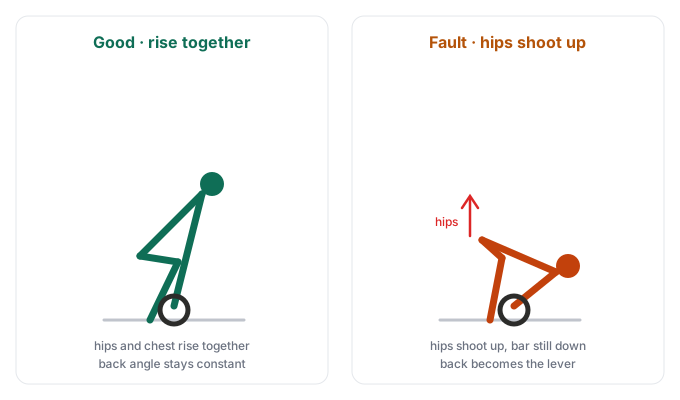
In a good pull, your hips and shoulders rise at the same rate: the back keeps a roughly constant angle, the chest stays up, and the bar comes off the floor in a straight line over midfoot. When the hips rise too fast, they win the race in the first inch — the back angle steepens toward horizontal and your leg drive gets skipped, so the back ends up doing a job your legs were supposed to start.
This is a timing/sequencing problem — when the hips move — which is different from a rounded back, which is about the position of the spine. They often show up together, but you fix the hip-rise by changing the sequence, not by bracing harder.
Why your hips shoot up
1. Weak leg drive relative to your back (most common at heavy loads). If your quads can't push the floor away with enough force, your body offloads to the muscles that can — the hips and back. The hips rise to hand the work over, exactly like the good-morning squat does on the way up. The tell: it appears at heavy weights and disappears at light ones (PowerliftingTechnique).
2. Setup too low — the most overlooked cause. If you start with your hips down in a near-squat position, they're below where your leverages actually want them. The instant you pull, the hips snap up to their natural height before the bar even moves — it looks like a fault, but it's really your start position correcting itself (Starting Strength). The fix here is the setup, not strength, and it's the fastest win on this list.
3. Pulling with the back, not the legs. Yanking a loose bar off the floor, or mentally "lifting" with the back instead of "pushing the floor," produces the same early hip rise even when you're strong enough.
Screen it first
- Film from the side, watch the first inch. Do the hips and bar move together, or do the hips jump while the bar sits still? That first inch tells you almost everything.
- Check your start height. Are your hips dropped down like a squat? Try setting up with hips a touch higher — where the angle of your back at the start matches the angle as the bar breaks the floor.
- Check the slack. Are you ripping a loose bar, or pulling the tension in first (bar pulled tight into the plates, lats engaged) before you drive? A loose start almost guarantees a hip jump.
Our deadlift form check watches that first inch from the side and flags when the hips beat the bar.
The fix
Step 1 — Fix the setup (do this first; it's free)
Find your natural hip height: the position where your shoulders sit just in front of the bar and your back angle doesn't change the moment you pull. For most people that's a bit higher than they think. Then take the slack out — pull up on the bar until it's tight against the plates and you feel your lats and hamstrings load, then drive. Half of all hip-shoot cases clean up right here.
Step 2 — Build the leg drive (if it only happens heavy)
- Paused deadlifts — a 1–2 second pause just off the floor forces the legs to keep driving instead of letting the hips bail early.
- Deficit deadlifts — standing on a small plate increases the range off the floor and overloads exactly the position where you fail.
- Front squats / leg press / tempo squats — direct quad strength so your legs can hold their share off the floor.
- The cue that works isn't "chest up" — it's "push the floor away" or "freeze the knees, then press the floor," which puts the leg drive first.
Step 3 — Drop the load if you need to
If the fault only appears near your top sets, train for a few weeks at the heaviest weight where your hips and chest rise together. Every heavy rep done with the hips shooting up just rehearses the wrong sequence.
When to see a professional
- Pain in the lower back during or after pulling — stop loading and get it assessed.
- The sequence won't change after weeks of setup and leg-drive work on video.
- The fault is identical at light and heavy loads with a deliberate, solid setup — worth a hands-on look at mobility or motor control.
What to track
- Side-view video of the first inch at the same load, every couple of weeks — do the hips and bar move together?
- The load at which the hips start shooting up — it should creep upward as your leg drive catches up.
- Paused-deadlift and front-squat strength — your proxy for the legs doing their share.
FAQ
Why do my hips rise first when I deadlift?
Usually one of two things: your legs can't drive the floor hard enough so the body offloads to the back (shows up heavy), or you set up with your hips too low and they snap to their natural height the instant you pull (shows up at every weight). Less often, you're pulling with your back instead of pushing with your legs.
How do I stop my hips shooting up in the deadlift?
Fix the setup first — raise your hips to their natural height and take the slack out of the bar before you drive. If it only happens heavy, build leg drive with paused and deficit deadlifts and front squats, and cue "push the floor away" instead of "chest up." Drop the load while you retrain the sequence.
Should my hips be low when I deadlift?
Not as low as a squat. Your hips should sit at the height where your back angle doesn't change when the bar breaks the floor — usually higher than beginners set up. Too low and they'll shoot up to that natural height anyway; too high and it becomes a stiff-legged pull.
Is it bad if my hips rise first?
It caps your deadlift (your back becomes the limiting factor while your legs still had more to give) and puts a long lever on your lower back under heavy load. It's not automatically an injury, but it's worth fixing for both strength and to keep the load off your spine.
Sources
- "How To Fix Hips Shooting Up In The Deadlift." PowerliftingTechnique.
- Inman, M. — "Hips Rising Early in the Deadlift." Starting Strength.
- "Deadlift Mistakes and How to Fix Them." BarBend.
We are experienced lifters who built an AI form-check tool, not licensed clinicians. The screening and programming here trace to the cited coaching sources. If you have lower-back pain during deadlifting, stop and see a qualified professional before continuing.