Read this first. This is a guide to bench-press technique, not a medical diagnosis. Form changes can take provocation off a cranky shoulder, but they don't treat an injury. Sharp or pinpoint pain, pain that lingers after training, night pain, or a feeling of instability means stop and see a qualified professional. What follows is for the common "it pinches at the bottom when my form drifts" case.
If your shoulder pinches at the bottom of the bench press, the most common technique causes are a grip that's too wide, elbows flared out toward 90°, and a loose, un-set shoulder blade. All three shrink the space the rotator-cuff tendons pass through and increase load on the front of the joint. The good news: there's solid 2024 biomechanics research on exactly which tweaks lower that load.
What's happening at the bottom (mechanically, not a diagnosis)
At the bottom of the press, the combination of a wide grip + flared elbows + a shoulder blade that hasn't been set lets the head of the upper-arm bone drift forward and reduces the subacromial space — the gap the rotator-cuff tendons run through. Squeeze that gap rep after rep and you get the classic impingement-type pinch at the front of the shoulder. It's a loading problem, and loading problems respond to changing how you load.
What the 2024 research actually shows
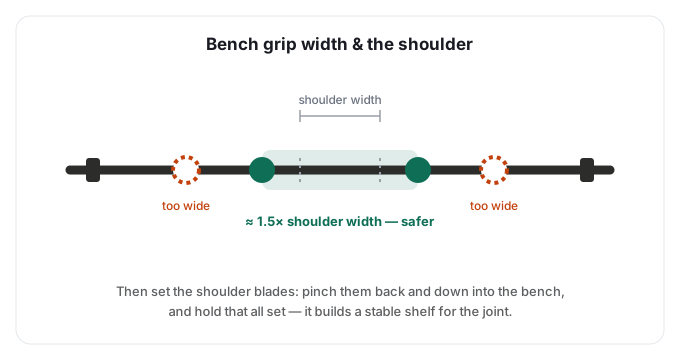
A peer-reviewed biomechanical study modeled how bench technique changes shoulder loads. Two variables stood out: scapular retraction and grip width. Setting the shoulder blades back-and-down and using a grip around 1.5× biacromial width (roughly 1.5× the distance between the bony points of your shoulders) lowered posterior shear force at the shoulder and reduced rotator-cuff activity — i.e. less of the loading associated with instability and cuff irritation (Frontiers in Physiology, 2024). Grips wider than that did the opposite. This is the same body of shoulder-load research behind our bench press elbow flare guide.
So you have two big levers: how wide you grip, and whether you set your shoulder blades.
The form fixes (in order of impact)
- Narrow the grip to about 1.5× shoulder width. Not the widest you can rack. A moderate grip keeps the shoulders in a stronger, safer position and is the single change most likely to quiet the pinch.
- Set the scapula — and keep it set. Before you unrack, pinch your shoulder blades together and pull them down toward your hips, into the bench. Hold that the entire set. It builds a stable shelf so the joint isn't free-floating under load.
- Stop flaring the elbows to 90°. Tuck them somewhere in the 45–75° range from your torso rather than straight out. (It's not a universal "45° rule" — the elbow flare guide has the nuance.)
- Touch lower. Let the bar meet your lower chest / sternum, not your collarbone. A high touch point forces the shoulders into the cramped position.
- Build a small arch and drive your feet. A modest upper-back arch helps set the shoulders back and shortens the range into the painful bottom position.
Screen it first
- Film from the side and from the head end. From the head end, eyeball your grip width against your shoulders and whether your elbows are flaring straight out. From the side, check where the bar touches and whether your shoulders round forward off the bench at the bottom.
- Test the pain. Does narrowing your grip a couple of finger-widths and setting your shoulder blades reduce the pinch on the next set? If a form tweak changes it, that's a strong sign technique is a big part of it.
Our bench press form check reviews your working set and flags a too-wide grip, elbow flare, and the touch point — the technique pieces tied to shoulder load.
When it is not a form problem — see a professional
Form tweaks reduce provocation; they do not fix an injured shoulder. Get it assessed if you have:
- Sharp, pinpoint, or catching pain (versus a general ache that eases when you fix your setup).
- Pain that lingers after the session, or wakes you at night.
- A feeling of instability, weakness, or the shoulder "slipping."
- No change after genuinely cleaning up grip width, scapular set, and touch point.
This is the line where "coaching cue" ends and "needs a clinician" begins — don't grind through it.
What to track
- Pain-free range — can you reach a full, controlled bottom position without the pinch after the form changes?
- Grip width — measured and consistent, around 1.5× shoulder width.
- Side and head-on video — shoulder blades staying set, elbows not flaring straight out.
FAQ
Why does my shoulder hurt when I bench press?
From a form standpoint, the usual causes are a grip that's too wide, elbows flared toward 90°, a shoulder blade that isn't set, and touching too high on the chest — all of which crowd the rotator-cuff tendons at the bottom. From a medical standpoint there are other causes (tendinopathy, impingement, instability) that technique won't fix, which is why sharp or persistent pain needs a professional.
How do I bench with shoulder pain?
First clean up the form: narrow the grip toward 1.5× shoulder width, set and hold your shoulder blades, tuck the elbows, and touch lower on the chest. If a tweak eases the pinch, keep training within the pain-free range. If pain is sharp, lingers, or doesn't change, stop and get it assessed rather than working around it.
Is the bench press bad for your shoulders?
Not inherently — done with a moderate grip and set shoulder blades, the loads on the joint are much lower than with a wide, flared, loose-shoulder setup. The 2024 research shows technique meaningfully changes shoulder load. The bench isn't the problem; an aggressive wide-grip setup often is.
Should I stop benching if my shoulder hurts?
If it's a mild ache that improves when you fix your grip and set your shoulder blades, you can usually keep training within a pain-free range. If the pain is sharp, pinpoint, lingers after training, or comes with weakness or instability — stop benching and see a qualified professional. Pushing through shoulder pain is how a small irritation becomes a long layoff.
Sources
- "Effects of bench press technique variations on musculoskeletal shoulder loads and potential injury risk." Frontiers in Physiology, 2024. (PMC mirror)
- "Eliminate Shoulder Pain During the Bench Press." The Barbell Physio.
We are experienced lifters who built an AI form-check tool, not licensed clinicians. The technique guidance here traces to the cited biomechanics and coaching sources. Shoulder pain that is sharp, persistent, or comes with weakness or instability needs a qualified professional — please get it assessed rather than working around it.