If you've filmed your bench press from the side and noticed your elbows aren't tucked to the textbook 45°, you've probably also heard ten different versions of the same warning: "tuck more or you'll tear your pec." The advice comes with intensity, but rarely with research, and almost never with the distinction that actually matters.
Here's what most form-check content gets wrong: "elbow flare" isn't one thing. The elbow position you set up in (your individual geometry) is different from the elbow position you press through (your active mechanics under load). The "fix" for one isn't the fix for the other. And the standard "45° tuck" advice, applied universally, can actually increase load on the very joint structures it's supposed to protect — there's now biomechanical modeling research from 2024 showing exactly that.
This article walks through what elbow flare actually is, where the 45° rule came from, what the research really shows about injury risk, and a four-point side-view self-check that tells you whether your particular bench press is the kind that warrants concern.
What "elbow flare" actually means (and why it's two different things)
The term gets used as if it's one thing. It isn't. Two different patterns get called "elbow flare" and they behave very differently under load.
Setup flare is the elbow angle you start the rep at. It's determined mostly by your individual anatomy — humerus length, scapula width, grip width preference, where the bar touches your chest. Two lifters with different proportions, both lifting with optimal form for them, will have visibly different elbow angles at the bottom. A lifter with long humeri and a wide grip might naturally set up at 70°. A lifter with shorter humeri and a narrower grip might set up at 50°. Neither one is wrong.
Press flare is the elbow angle changing during the press. Specifically, the elbows rising — hinging upward — as the bar travels. This pattern is different. It shifts the bar's path forward of the shoulder joint, reduces triceps leverage, and increases stress on the anterior shoulder capsule and rotator cuff. This is the kind worth caring about.
Think of it like a door hinge. Setup flare is the angle the hinge is installed at — it's a geometric fact about the door. Press flare is the door swinging out of alignment as you open it — that's the mechanical problem.
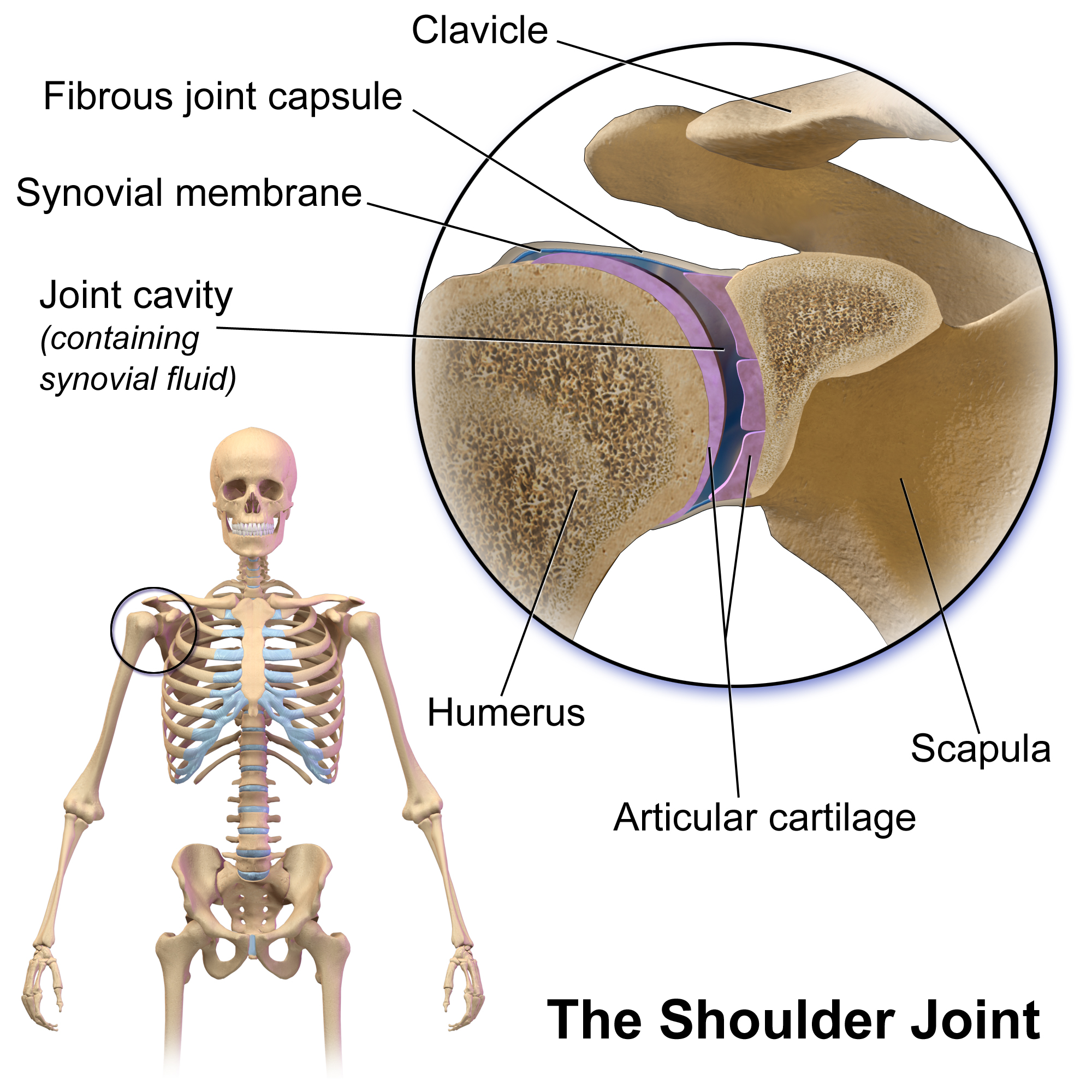
In the videos we've analyzed, most lifters who panic about "elbow flare" are actually showing setup flare — they're shaped differently from the diagram in the article they read, and they've concluded their natural mechanics are wrong. They've been worried about the wrong pattern.
Where the "45° tuck" rule came from — and why top coaches don't follow it
The "tuck to 45°" cue spread through powerlifting forums in the 2000s, partly as a way to differentiate from bodybuilding's wider, more pec-focused bench style. It became gospel. It's also wrong as a universal prescription, and the most credentialed coaches in the space say so explicitly.
Greg Nuckols (MA, Exercise & Sport Science) has argued in his bench press coverage that "tuck your elbows" is a poor cue for raw bench press — that in his form-check work, roughly two out of three new clients are over-tucked, sacrificing leverage and shoulder positioning. His recommended cue is closer to "flare and push" — meaning lifters should let the elbows find their natural position and focus on driving the bar in a controlled path.
Jordan Feigenbaum, MD (Barbell Medicine) frames it more directly: the standard 30–45° tuck advice is "probably incorrect for 50% of people." His teaching prioritizes grip width and bar touch point first, with elbow angle as a downstream consequence of those choices rather than a number to chase.
The translation: 45° is a reasonable average, not a universal target. If your individual mechanics put your elbows at 60° at the bottom with a stable bar path and no pain, you're not breaking a rule. You're just not the lifter the rule was written for.
The anatomy that decides your optimal angle
Three things determine where your elbows should be at the bottom of a bench press, and none of them is "what you read on Instagram."
Humerus length. Longer arms create a larger lever arm at any given angle. A lifter with long humeri pulled tight to a narrow grip will end up with a very acute elbow angle that wastes shoulder space; the same lifter at a wider grip with elbows at 60° will be in a much stronger position. Shorter-armed lifters can tolerate tighter tucks because their levers are shorter.
Grip width. Wider grip = more elbow flare at the same bar height. Narrower grip = more tuck. Grip width should be chosen first (based on what's comfortable, what passes a competition standard if relevant, and where the bar naturally lands on your chest), and elbow angle will follow.
Where the bar touches the chest. If the bar touches high (closer to the clavicles), your elbows will tuck more. If it touches lower (closer to the lower sternum or upper abdomen, common in arched powerlifting setups), your elbows will flare more. The touch point is set by setup, not chased by cue.
The functional check that matters more than the absolute angle: from a side view, your forearm should be roughly vertical at the bottom of the press, meaning your elbow is directly under the bar. Whether that puts your humerus at 45°, 60°, or 75° relative to your torso depends on your proportions.
Is elbow flare actually harmful?
So is letting your elbows flare actually going to wreck your shoulders? The data is less clear than the warnings suggest.
The standard concerns are real but conditional. Pectoral tendon ruptures do happen during bench press, and they happen preferentially in positions of high shoulder extension combined with abduction and external rotation. Long et al. (2022) characterize the high-risk position as roughly 30° of shoulder extension with the arm externally rotated and abducted — which is the bottom of a wide-grip bench press for someone with limited shoulder mobility. Subacromial impingement risk also rises with wider grips and higher humeral abduction angles, because the humeral head loads the underside of the acromion more directly.
But wider angles aren't the only stress profile that creates problems, and this is where the standard advice gets oversimplified.
Noteboom et al. (2024), publishing in Frontiers in Physiology, ran ten experienced strength athletes through 21 bench press variations — three abduction angles (45°, 70°, 90°), three grip widths, and three scapula positions — then modeled the resulting joint loads with an OpenSim shoulder model. Their finding was not "smaller angle is safer." It was that 45° shoulder abduction produced larger glenohumeral superior shear force components at the start and end of the press, especially when combined with narrow grip widths. Their clinical interpretation is unusually direct: "for athletes experiencing problems or pain in the area above the glenohumeral joint, for instance experiencing subacromial pain syndrome, it might be better to avoid small shoulder abduction angles of 45° and narrow grip widths of 1 BAW."
Read that twice. The exact combination most articles call "the safe bench press" — tucked elbows, narrow grip — is the combination the paper flags as potentially worse for one of the most common shoulder pain syndromes. Modeling research isn't the same as outcome data, and the study is a simulation rather than a clinical trial. But it directly undermines the "tuck to be safe" universal.
The honest framing isn't "tuck to 45° to be safe." It's: every elbow angle trades one stress profile for another. Wide grip with 90° abduction loads the AC joint and stretches the pec further. Narrow grip with 45° concentrates superior shear at the glenohumeral joint. The "right" angle is the one that matches your anatomy and where you don't have pain. Universal advice can't make that match for you.
The "45° tuck" cure has its own cost
This is the part no other top-ranked article on this keyword says out loud.
The standard prescription — "tuck your elbows to 45° to protect your shoulders" — comes with an unstated assumption: that smaller abduction angles are unequivocally safer. Three things wrong with that.
First, over-tucking produces a fault Aaron Horschig, DPT, has called the mousetrap in his bench press coverage — elbows clamped down hard, wrists folding backward to compensate, the whole structure weaker than it should be. Lifters who chase the cue often end up in this position without realizing the cue is what caused it.
Second, as the Noteboom et al. modeling shows, the narrow-grip + 45° combination concentrates shear at the glenohumeral joint exactly where subacromial pain syndrome lives. For a lifter who already has anterior shoulder discomfort, this is precisely the worse choice — even though it's the advice they're most likely to be given.
Third, the leverage cost. Over-tucked elbows put the triceps and front delts in a mechanically disadvantaged position. Lifters who report "my bench feels weaker since I started tucking" are usually accurately reporting their own mechanics, not imagining it. Two-thirds of Nuckols' form-check clients, by his account, hit immediate strength PRs when they were given permission to let their elbows flare slightly.
The honest version: if your setup elbow angle is in the 50–75° range and your bar path is stable from chest to lockout, leave it alone. If your elbows actively rise during the press, that's the pattern to address. The two cases call for different responses, not a blanket "tuck more."
The 60-second side-view self-check
Pull up your bench video, side view, at a moderate working weight. Run four checks.
1. Setup vs. press timing. Where is your elbow at the bottom of the rep, and where does it travel during the press? If it stays in roughly the same plane as the bar throughout (forearm vertical, elbow under the bar), you have a stable pattern regardless of the absolute angle. If the elbow rises during the press — moves up relative to the bar — that's active flare, the pattern worth addressing.
2. Bar path. Watch a single rep at 0.25x speed. Does the bar travel in a controlled diagonal (down and back toward your chest, up and slightly forward over your shoulders)? Or does it drift forward as you press, with the elbows leading the bar? Forward drift is a strong signal of leverage loss and shoulder stress.
3. Symptoms. Any sharp pain during the press? Anterior shoulder ache afterward? Clicking or pinching at the top of the lockout? Pain is information that overrides any geometric check.
4. Load. At what percentage of your 1RM does the active flare appear? Setup flare at any weight is anatomy. Active flare that only shows up at 85%+ is fatigue or technique breakdown under load. Active flare that appears at moderate weights is a more persistent pattern.
Take the four together:
- Green — stable elbow position throughout the press, clean bar path, no symptoms, consistent at moderate to heavy loads: keep training. Film monthly to confirm.
- Yellow — slight active flare on the heaviest sets, no pain, bar path still controlled: drop load 5–10%, focus on tempo eccentric work (3-second descent) for 4–6 weeks. Re-test.
- Red — pain, significant bar path drift, or active flare appearing at moderate loads: stop loading heavy. The fix isn't a cue — the position itself needs work, and pain warrants a physical therapist evaluation.
If you'd rather have a tool measure these dimensions automatically, our squat form check currently covers squat, deadlift, and overhead press; bench-press support is on the roadmap. For the side-view squat-related issues in the same family, see our butt wink guide.
What to do, by tier
The protocol depends on which tier the self-check put you in.
Green tier: do nothing. Your mechanics are working. Film monthly to confirm the pattern stays stable as load increases. If you'd like to optimize further, the highest-leverage variables are usually grip width and touch point — both worth experimenting with at lighter loads, not at working sets.
Yellow tier: change a variable, not your bracing cue. Three options, in order of effort:
- Tempo work. 3 sets × 5 reps with a 3-second eccentric, at 70% of your normal working weight, for 4–6 weeks. Slowing the eccentric makes active flare harder to mask and forces you to maintain position throughout.
- Spoto press variation. Pause the bar 1–2 inches above the chest, hold for 1 second, then press. The pause eliminates the bounce that often hides active flare, exposing the position you actually have.
- Grip width adjustment. If your active flare is severe, narrowing the grip by half a bar-width often resolves it. Wider grips amplify the leverage problem; narrower grips give the triceps more leverage to keep the elbow under the bar.
The cue not to use, despite its popularity: "tuck your elbows harder." That cue tends to over-correct into the mousetrap pattern. Instead, cue "screw your hands into the bar" or "spread the bar apart" — both subtle external rotation cues that stabilize the shoulder without forcing the elbow into an artificial position.
Red tier: stop and get evaluated. Pain during the press or at the lockout, significant bar path drift, or active flare at moderate loads is not a problem you cue your way out of. See a PT before changing anything about your bench. This is one of the situations where the smartest move is to let someone with hands on the joint look at the joint.
FAQ
Should my elbows be at exactly 45°?
Probably not. The 45° rule is a population average that's wrong for roughly half of lifters depending on their humerus length, grip width, and where the bar touches their chest. The functional check that matters is whether your forearm is vertical at the bottom of the press, meaning the elbow is under the bar — and that puts different lifters at different absolute angles. Greg Nuckols and Jordan Feigenbaum MD have both publicly argued against treating 45° as universal.
Why does my bench feel weaker when I tuck hard?
Because it usually is weaker. Over-tucking pulls the elbows into a mechanically disadvantaged position for both the triceps and the front delts, and often produces what Aaron Horschig calls the "mousetrap" — wrists folding back, structure unstable. If your bench feels weaker after you started tucking aggressively, that's accurate proprioception, not imagination.
Does flaring tear pecs?
It can contribute, in specific combinations. Pectoral ruptures occur preferentially in positions of shoulder extension + abduction + external rotation — wide grip plus relaxed elbow plus heavy load is the high-risk combination. But flare per se isn't the cause; it's the combination with depth, load, and lifter mobility that creates the risk. Most setup flare in the 50–75° range with a controlled bar path isn't in the high-risk window.
Why do powerlifters at 1RM flare more than during warmups?
Load. As loads approach maximum, the body adopts whatever leverage configuration lets it move the weight, which often includes slightly more elbow flare than the same lifter uses at warmup weights. This is similar to the load-dependent kyphosis pattern we discuss in our rounded back deadlift guide — at heavy loads, the body finds leverage the technique cues of lighter loads obscure. As long as the lifter isn't hitting positions where they have pain or losing bar path control, this is normal adaptation.
Can a wider grip cause shoulder impingement?
Modeling research suggests it can. Noteboom et al. (2024) found that wider grips combined with 90° humeral abduction increase compressive forces at the AC joint. That doesn't mean wider grip = injury. It means lifters with a history of impingement should be cautious about competing extremes — the 1.5+ bar-width grip at 90° abduction is a different stress profile than a comfortable mid-grip with elbows at 65°.
What this means
Elbow position in the bench press is not a number to chase. It's the output of three variables — humerus length, grip width, bar touch point — and the right output for any lifter is whatever puts the forearm vertical at the bottom with a controlled bar path and no pain. The "tuck to 45°" rule is a population average, not a universal truth, and the 2024 modeling research suggests that combination can actually concentrate shear forces at the joint structures most prone to chronic shoulder pain.
This week: film one working set from the side, run the four-point self-check, and sort yourself into Green, Yellow, or Red. If there's no pain and your bar path is stable, the elbow angle isn't the variable to worry about. If there is pain — sharp, lingering, or worsening — book a PT visit before adjusting anything about your bench technique.
Sources
- Noteboom, L., Belli, I., Hoozemans, M. J. M., Seth, A., Veeger, H. E. J., & Van Der Helm, F. C. T. (2024). "Effects of bench press technique variations on musculoskeletal shoulder loads and potential injury risk." Frontiers in Physiology, 15:1393235.
- Long, M. K., Ward, T., DiVella, M., Enders, T., & Ruotolo, C. (2022). "Injuries of the Pectoralis Major: Diagnosis and Management." Orthopedic Reviews, 14(4).
- Kusler, J. E., Chong, A. C. M., & Piatt, B. E. (2019). "Bilateral Pectoralis Major Tendon Rupture While Performing Intermediate Level Bench Press." Kansas Journal of Medicine, 12(3), 94–96.
- Nuckols, G. — Commentary on bench press elbow tuck cueing, Stronger by Science.
- Feigenbaum, J. — Barbell Medicine bench press teaching.
- Horschig, A. — Commentary on the "mousetrap" bench press fault, Squat University.
We are experienced lifters who built an AI form-check tool, not licensed clinicians. The biomechanics claims here trace to the researchers and clinicians cited in Sources. If you have pain during bench pressing, see a physical therapist before changing your technique.