If you've filmed your overhead press from the side and noticed your torso angles back, you've also probably read three articles that contradict each other. One tells you the lean is cheating and you should "press strict." Another tells you the lean is necessary because the bar has to clear your chin. The Instagram cue is "ribs down, glutes tight." The powerlifting article says "throw the hips forward to get under the bar." Nobody tells you, on your specific video, which kind of lean you're actually doing.
Here's what most form-check content misses: "leaning back" isn't one thing. There's the deliberate hip-hinge layback that experienced lifters use as a leverage technique. There's a small thoracic extension that helps the bar clear your face. And there's lumbar hyperextension — the rib-flared, anterior-pelvic-tilt pattern that is the actual fault. The three look similar on a phone in a gym. They aren't the same.
This article walks through what each kind of lean really is, why your shoulder mobility decides whether you have a choice in the matter, what the research actually shows about overhead press lumbar load, and a four-point side-view self-check to sort your particular press into one of those three patterns.
What "leaning back" really means — three different things
Most articles use "lean back" as if it describes one movement. In side-view video, three distinct patterns get called that name.
Hip-hinge layback is the deliberate technique used in classic Olympic-style and powerlifting overhead presses. The lifter pushes the hips forward (anterior pelvic translation), the torso angles back as a consequence, and the press initiates from that position. The lower back is not hyperextended — the glutes and abs are braced hard, the ribs stay down, and the lean is driven from the hips, not the lumbar spine. Jordan Feigenbaum, MD, describes this explicitly in Barbell Medicine's classic press teaching as a position you should set into deliberately before pressing, not something that happens to you mid-rep.
Thoracic extension lean is a small upper-back arch that gets the bar past your chin without forcing the cervical spine into uncomfortable extension. For most lifters, this is automatic and small — a few degrees of T-spine extension. It's not a fault; it's geometry. The bar starts in front of your face, has to travel over your shoulders to lock out, and the simplest way to get it there is a slight upper-back arch. Lifters with limited thoracic extension mobility can't do this cleanly, which is when the next pattern shows up.
Lumbar hyperextension is the actual fault. The ribcage rides up (rib flare), the lower back arches further than its neutral curve, and the abs and glutes lose tension. This is the pattern Bret Contreras (PhD) identifies as the mechanism behind overhead-press-related lower back pain. It looks similar to hip-hinge layback on a quick glance, but the mechanics are entirely different — and so are the loads on the lumbar spine.
The distinction matters because the "fix" is opposite depending on which pattern you have. A lifter showing controlled hip-hinge layback who tries to "press more strictly" usually ends up substituting lumbar hyperextension to get the bar overhead. A lifter showing lumbar hyperextension who tries to "lean back more" makes the problem worse. Telling them apart from a side-view video is the entire game.
Why it happens — three real causes, not seven
Most articles list six or seven causes. Three actually matter, and one of them isn't typically discussed.
Bar path geometry. The bar starts roughly in front of your face. It has to travel up and back over the midline of your shoulders to finish over your base of support. This geometric requirement means some backward lean is mechanically necessary — your torso has to make room for the bar to pass your chin and end up overhead, behind where it started. Lifters who refuse any lean either fail to clear the chin (the bar grinds against the face) or end up with the bar finishing forward of the shoulders (which loads the spine in a different problematic way). A small lean isn't cheating; it's how the trajectory works.
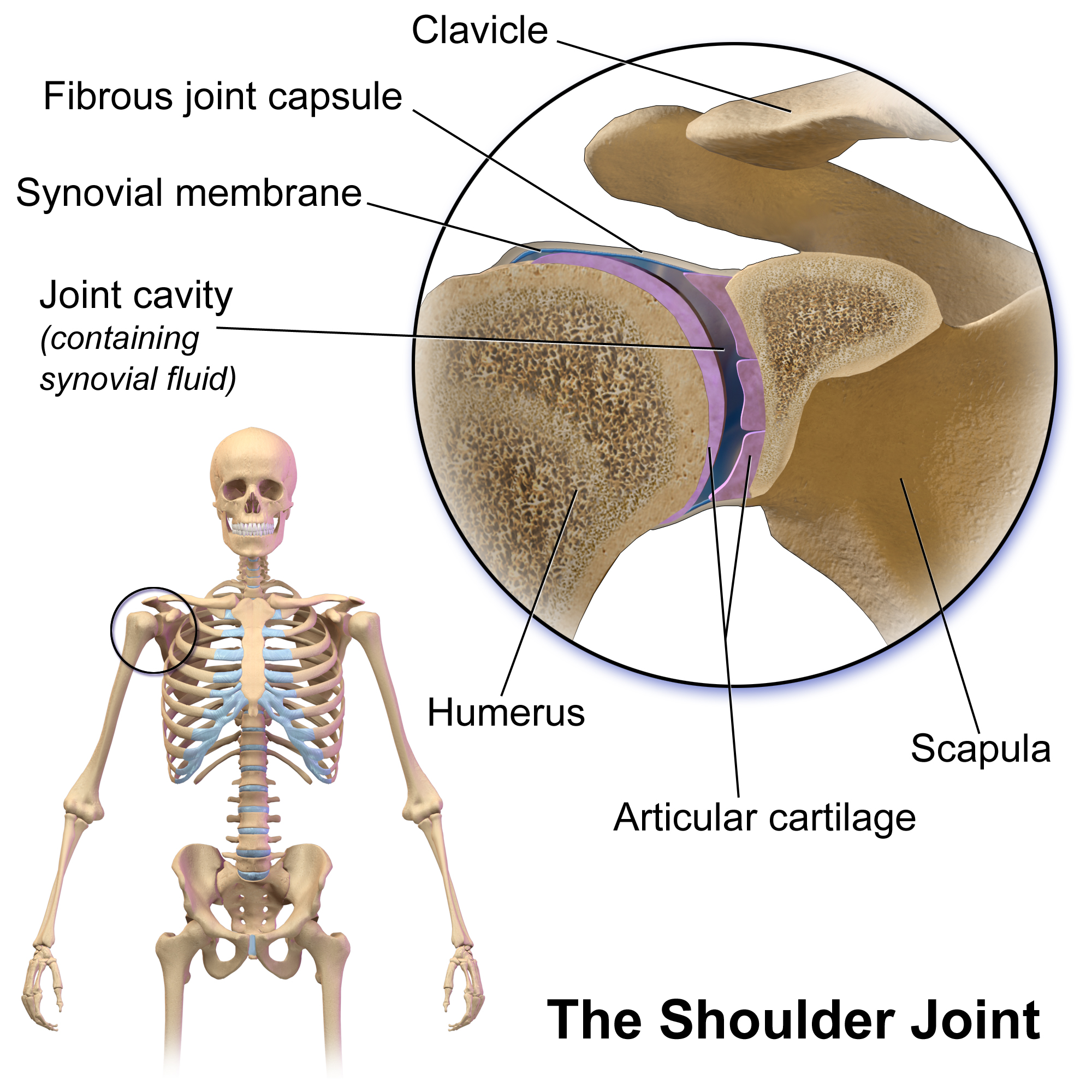
Shoulder flexion range of motion. This is the cause everyone skips, and it's often the most important one. To press a bar straight up overhead, your glenohumeral joint needs roughly 83° of flexion and 83° of abduction (absolute), per Dyer et al. (2024), studying the threshold for lifting the arms above 120° of global shoulder flexion in a clinical population. The study used post-surgical shoulder patients, so the absolute number is a clinical benchmark, not a strength-athlete optimum. But the principle generalizes: if you can't physically reach overhead with your arm vertical, you either have to lean back to bring the bar into a reachable position, or you have to find that missing range from somewhere else in your body. The "somewhere else" is almost always lumbar hyperextension.
Thoracic extension mobility. Even if your glenohumeral joint has the range, your upper back has to extend slightly to bring the bar over your shoulders. Lifters who sit at desks for a living often have limited thoracic extension; when they press, the upper back can't give what's needed, and the lumbar spine compensates. Same mechanism as the shoulder ROM issue, different joint.
Two causes you'll see in other articles that we're not putting on the list: "weak core" and "tight hamstrings." Neither Bret Contreras nor Aaron Horschig names either as the primary driver. The lumbar hyperextension that hurts people isn't usually about the abs being too weak to hold position — it's about the lifter trying to get a bar overhead through joints that won't give the required range, and the lower back paying the cost.
Is leaning back actually harmful?
So is overhead press leaning back going to wreck your spine? The data is less alarming than the warnings suggest, but the answer depends on which pattern you have.
The standard concern is lumbar hyperextension under load. The most common worst-case named in popular articles is spondylolisthesis — a forward slippage of one vertebra on another, associated with repeated lumbar extension stress. The mechanism is plausible. The evidence linking it specifically to overhead pressing in lifters is thin — most spondylolisthesis literature comes from gymnastics, cricket fast bowling, and similar repetitive-extension sports, not barbell training. We're not aware of longitudinal cohort data on overhead press lumbar injury rates.
What we do have is electromyography research on what the lumbar musculature is actually doing during a press. A 2022 study in Sensors (MDPI) compared muscle activation between standing overhead press and push press, finding that the erector spinae (the deep back muscles that resist lumbar flexion and stabilize the spine) showed significantly greater activation during push press than strict press, with greater anterior center-of-pressure displacement during the push press eccentric. Translation: the lumbar musculature is normally working hard in an overhead press, and harder still in a push press. Activation isn't pathology. The lumbar spine isn't supposed to be passive during a heavy overhead press.
Saeterbakken & Fimland (2013) also found that standing barbell overhead press 1RM was about 7% greater than standing dumbbell and 10% greater than seated dumbbell, with the standing variants producing greater deltoid EMG. Standing presses demand more stabilization, and they reward it — the system that allows controlled lean produces more force than the rigid alternative.
The actual concern is narrower: lumbar hyperextension with rib flare and lost abdominal tension, sustained across many heavy reps, repeated week after week, in lifters whose shoulder or thoracic mobility is forcing them into the compensation. That's the pattern with credible injury risk. A controlled hip-hinge layback with the brace held isn't the same pattern.
Forcing strict-vertical has its own cost
This is the part no other top-ranked article on this keyword says out loud.
If a lifter has limited shoulder flexion mobility — say, the 83° glenohumeral threshold from Dyer 2024 isn't there — they have one of two options to get a bar overhead. They can allow some hip-hinge layback that brings the bar into a reachable position. Or they can refuse the lean and substitute lumbar hyperextension to find the missing range. The first option distributes load across the hips and entire posterior chain in a position the body can brace against. The second option concentrates extension force on the lumbar spine specifically.
The "press strict, stand perfectly vertical, no lean" advice — applied universally to lifters whose shoulder mobility doesn't allow it — pushes them toward the second option. The cure becomes the disease.
This is our reasoning from the framework, not a quoted DPT position. We didn't find a clinician saying in those exact words "forcing strict press into limited shoulder ROM causes lumbar substitution." But it follows directly from the Dyer ROM thresholds, the lumbar substitution mechanism Bret Contreras describes, and the basic logic of joint substitution: if motion at one segment is restricted, the adjacent segment usually takes the slack. For an overhead press, the segment that takes the slack is almost always the lumbar spine.
The practical implication: if your shoulder mobility doesn't permit a clean strict press, the right answer isn't to brace harder against the lean. It's either to allow controlled hip-hinge layback (with the brace held), or to switch to a variation — half-kneeling, seated, single-arm — that doesn't demand the full vertical line until your shoulder mobility catches up.
The 60-second side-view self-check
Pull up your overhead press video at a moderate working weight, side view, and watch in slow motion. Run four checks.
1. Where does the lean originate? Watch the moment between the bar leaving the rack and clearing your face. Does your torso tilt back as a single unit (the lean is coming from your hips)? Does your upper back arch slightly (the lean is coming from your thoracic spine)? Or do your ribs visibly ride up and your lower back arch deeper than its standing curve (the lean is coming from your lumbar spine)? The first two are mechanically OK. The third is the pattern worth addressing.
2. Rib flare check. Compare the position of your lower ribcage at the bottom of the press to your standing posture. If your ribs are flared up — chest pushed out, lower ribcage rotated forward — your abs have lost tension and your lumbar spine is taking the load. If the rib cage stays in the same plane as your standing posture, your brace is holding.
3. Symptoms. Any sharp pain in your lower back during the press, lingering ache afterward, or stiffness the next morning? Pain is information that overrides any geometric check. If yes, this isn't a cue problem; it's a back problem, and a PT visit comes before any technique adjustment.
4. Bar path at lockout. Does the bar finish behind your face — meaning your head has come through the window of your arms? Or does it finish in front of your face, with your head still in front of the bar? The first is a clean overhead position. The second is where the lumbar spine compensates for whatever range was missing upstream.
Take the four together:
- Green — lean originates from hips or T-spine, ribs stay down, no symptoms, bar finishes overhead with head through the window: keep training. Film monthly to confirm.
- Yellow — visible rib flare or mild lumbar arch but no pain, head still finishes through: shoulder and T-spine mobility work for 4–6 weeks (specific drills below). Consider half-kneeling or seated variants while you build the range.
- Red — visible lumbar hyperextension, rib flare, OR any pain in the lower back or shoulders OR the bar finishing in front of the face: stop loading heavy. The position itself needs work, and pain warrants a PT evaluation.
If you'd rather have a tool measure these dimensions automatically from a side-view video, our overhead press form check is built around exactly this kind of pattern detection. For the side-view squat-related variant of the same "where does the deviation come from" question, see our butt wink guide.
What to do, by tier
The protocol depends on which tier the self-check put you in.
Green tier: do nothing. Your mechanics are working. Film monthly to confirm the pattern stays stable as load increases. The biggest risk in this tier is reading another article that tells you you're doing it wrong and over-correcting.
Yellow tier: address mobility, not bracing. Three priorities:
- Glenohumeral flexion mobility. Wall slides, banded shoulder dislocates, hanging from a pull-up bar. The goal is to consistently reach arms-overhead with the lumbar spine neutral. 5–10 minutes daily for 4–6 weeks.
- Thoracic extension mobility. Foam roller T-spine extensions, quadruped thoracic rotations. Same time commitment, same window.
- Variation while you build. Half-kneeling overhead press, seated overhead press, and single-arm dumbbell press all reduce the lumbar stability demand while you work on the mobility upstream. Use them at moderate loads during the mobility-building window; return to the standing barbell variant as the mobility improves.
The cue that helps in the Yellow tier is "ribs down" — meaning maintain abdominal tension and don't let the ribcage rotate up under load. This is the right cue when the issue is brace failure. It's the wrong cue if the underlying issue is shoulder mobility, because no amount of ab tension will give you glenohumeral range you don't have.
Red tier: stop and get evaluated. Pain or visible lumbar collapse under load is not a problem you cue your way out of. See a PT before changing anything about your overhead press. This is one of the cases where the smartest move is to let someone with hands on the joint examine the joint.
FAQ
Does the "lean from hips not back" cue contradict the "deliberate layback" technique?
Not really — they're saying the same thing with different vocabulary. The "lean from hips" cue is trying to keep lifters out of lumbar hyperextension. The "deliberate layback" technique from classic press teaching is also driven from the hips, with the abs and glutes braced. Both are pointing to hip-hinge layback as the correct pattern, and both are warning against lumbar substitution. The disagreement is more about emphasis than mechanism.
Should I switch to seated overhead press if I tend to lean back?
Conditional yes. Seated press removes the standing balance demand, which makes it easier to maintain a neutral lumbar position. Saeterbakken & Fimland (2013) found that standing barbell overhead press allows roughly 10% more 1RM than seated dumbbell — which means standing is genuinely a more productive variant for strength, but only if you can do it without the lumbar compensation. If your standing press shows Red-tier patterns, seated is a reasonable bridge while you address the mobility limitations.
Is push press worse for the lower back than strict press?
The lumbar musculature works harder in push press, per the MDPI 2022 EMG study — but harder activation doesn't equal injury. Push press uses a hip drive to initiate the bar's upward path, which means the lumbar spine has to brace against a momentary shift in center of pressure. Done with good technique, this is normal training stress. Done with the same lumbar hyperextension pattern as a poor strict press, the consequences are similar. The variant doesn't matter as much as whether you maintain spinal position under load.
How much lean is too much?
We don't have a measured threshold in the published literature. The functional answer: as much lean as is needed to clear the bar over your shoulders with the abs and glutes braced and the lumbar spine in a roughly neutral position, and no more. For some lifters that's almost vertical. For others — especially those with limited shoulder flexion — it's a noticeable hip-hinge layback. The "too much" line isn't a number; it's the point where rib flare, lost brace, or lumbar arching start to appear.
Why does my lean get worse on the heaviest sets?
Load. As loads approach maximum, the body finds whatever leverage configuration lets it complete the lift. For overhead press, that often includes more lean, because the increased lean improves the bar path and gives the deltoids a more favorable angle. As long as the brace holds and the lumbar position doesn't collapse, this is normal adaptation — similar to the load-dependent thoracic kyphosis we discuss in our rounded back deadlift guide. The line is whether the lean stays controlled or becomes lumbar substitution at the top end.
What this means
Leaning back in your overhead press isn't one thing, and the right response depends on which kind you're doing. Hip-hinge layback with the brace held is a technique. Lumbar hyperextension with rib flare is a fault. The two look similar on a phone in a gym but represent completely different load patterns. Most lifters reading this who panic about their lean are actually doing the first kind — and have been worried about the wrong thing.
This week: film one working set of overhead press from the side, watch in slow motion, run the four-point self-check, and sort yourself into Green, Yellow, or Red. If you're not sure where the lean originates, our overhead press form check measures the kinematics automatically. And if there's pain — in the lower back or in either shoulder — see a PT before adjusting anything about your press.
Sources
- Dyer, T., Swanenburg, J., Schwameder, H., & Bouaicha, S. (2024). "Defining the glenohumeral range of motion required for overhead shoulder mobility: an observational study." Archives of Physiotherapy.
- Saeterbakken, A. H., & Fimland, M. S. (2013). "Effects of body position and loading modality on muscle activity and strength in shoulder presses." Journal of Strength and Conditioning Research, 27(7), 1824–1831.
- "Effect of the Weight and Type of Equipment on Shoulder and Back Muscle Activity in Surface EMG during the Overhead Press." Sensors (Basel), 22(24), 9762, 2022.
- Feigenbaum, J. — "Press Like A Pro: The Classic Press" — Barbell Medicine doctrine on deliberate hip-hinge layback.
- Contreras, B. — "Military Press Hurts My Back" — root-cause framework for overhead press lumbar pain.
- Horschig, A. — Shoulder mobility content, Squat University.
We are experienced lifters who built an AI form-check tool, not licensed clinicians. The biomechanics claims in this article trace to the researchers and clinicians cited in Sources. If you have lower back or shoulder pain during overhead pressing, see a physical therapist before changing your technique.